
Why Knee Pain Hits Women Harder: Hormones, Hip Width and the Kneecap Problem Nobody Talks About
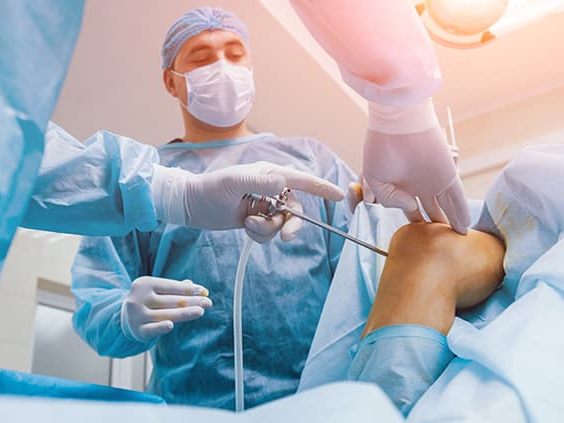
Ask a room full of women in their thirties and forties whether their knees ever bother them and most hands go up. Stairs that ache on the way down. A dull pain behind the kneecap after a long drive or a night at the movies. A knee that feels unreliable in a lunge at the gym. It is so common that many women assume it is simply part of being active, or part of getting older.
It is neither. Women's knees are built and loaded differently from men's, and the research on that difference has grown considerably over the past two decades. Understanding it changes what you do about the pain, and when you stop waiting for it to go away on its own.
Three patterns stand out in the evidence. Pain at the front of the knee, known clinically as patellofemoral pain, is more than twice as common in women as in men, according to a large study of military recruits published in the Scandinavian Journal of Medicine and Science in Sports. Anterior cruciate ligament tears in pivoting sports such as netball, football and skiing occur two to eight times more often in women, depending on the sport studied. And knee osteoarthritis later in life is significantly more prevalent and more severe in women, particularly after 50. In Australia the pattern shows up in the national statistics: the Australian Institute of Health and Welfare reports that osteoarthritis is more common in women than in men in every age group from 45 upwards, and the gap widens with age. Part of the explanation is simply geometry. Women tend to have wider hips relative to the length of their thigh bone, which means the thigh angles inwards more sharply towards the knee. Clinicians call this the Q angle, and a larger one pulls the kneecap slightly outwards every time the quadriceps contract. The kneecap is supposed to glide in a groove at the end of the thigh bone. When it tracks a little to the outside instead, the cartilage on its underside takes uneven pressure. Over thousands of steps, squats and stair climbs, that shows up as the ache behind and around the kneecap that so many women recognise. In some women the groove itself is shallower than average, or the ligaments holding the kneecap are naturally more lax, and the kneecap can slip partly or fully out of place. That is patella instability, and it is far more common in young women than most people realise. Oestrogen does more than regulate the reproductive cycle. Ligaments and tendons carry oestrogen receptors, and the hormone influences how stiff or pliable those tissues are. Several studies have found that ligament laxity varies across the menstrual cycle, and that ACL injuries cluster in the days around ovulation, when oestrogen peaks. The effect is modest and the research is still evolving, but it helps explain why the same landing that a male teammate shrugs off can be the one that tears a woman's ligament. Pregnancy adds another layer. Relaxin and rising oestrogen loosen the pelvis in preparation for birth, and the effect is not confined to the pelvis. Many women notice their knees feel less stable in the third trimester and for months afterwards, at exactly the time they are carrying extra weight and lifting a growing baby. Then, at the other end of reproductive life, falling oestrogen at menopause is associated with a sharp rise in joint pain and in the progression of osteoarthritis. If geometry and hormones were the whole story there would be little to do about it. They are not. The factor that has the most influence, and the one women can actually change, is muscle. The gluteal muscles at the side and back of the hip control how the thigh moves when you land, squat or climb. When they are weak or slow to activate, the knee collapses inwards, the kneecap tracks outwards, and every one of the anatomical disadvantages above gets worse. Women on average have less strength in these muscles relative to body weight than men, partly through biology and partly because so much traditional exercise advice for women has focused on cardio and core rather than the hips. Dr Tan Sok Chuen, an orthopaedic surgeon at Hip and Knee Orthopaedics in Singapore and the country's first female hip and knee surgeon, sees the consequence every week. "The knee is usually the victim, not the culprit," she says. "Most women who come to me with anterior knee pain and patella instability have a hip problem they cannot feel. Strengthen the hip and the kneecap often settles on its own. The women who do best are the ones who start that work early, before the cartilage under the kneecap has been irritated for years." The good news is that the most effective treatment is also the cheapest. Strength work aimed at the glutes and the outer hip, two or three times a week, is the foundation of every good knee programme for women. Side-lying leg raises, clamshells, single-leg bridges, step-downs from a low box with the knee kept over the second toe, and squats to a chair with a resistance band around the knees are all simple, evidence-backed starting points. The goal is not bulk but control: a knee that stays in line when you land, lunge or descend stairs. Footwear matters more for women than the shoe industry likes to admit. Heels shift weight forward and increase the load behind the kneecap; a day in them followed by a workout is a common trigger for a flare. Alternating heel heights, keeping a flat pair at the desk and warming up the hips before training all help. Load management is the other half. Knee pain at the front usually comes from a sudden increase in something: a new running programme, a return to netball after a break, a fitness challenge with hundreds of squats. Building volume gradually, with rest days between hard sessions, prevents most of it. Not every sore knee needs a specialist. But some do, and women tend to leave it later than men. See a doctor if the pain has lasted more than six weeks despite sensible rest and strengthening, if the knee swells after activity, if it locks or catches, if it has given way or if the kneecap has ever visibly shifted out of place. A partial dislocation of the kneecap in a teenager or young woman is not a one-off; without proper assessment it tends to recur, and each episode damages cartilage. A good assessment involves more than an X-ray. It looks at how the hip, knee and foot work together, and it produces a plan that is specific to your anatomy rather than a generic handout. Surgery is rarely the answer for anterior knee pain and is reserved for structural problems that physiotherapy cannot fix, such as a kneecap that keeps dislocating. Women's knees are not weaker. They are loaded differently, by hips that are wider, ligaments that respond to hormones, and muscles that are too often left untrained. Every one of those factors can be managed, and the earlier the work starts, the less likely a nagging ache becomes a lifelong problem. Treat the hips, respect the load, and take a knee that gives way seriously. That combination keeps most women moving comfortably for decades.The numbers are not in women's favour
Hips, angles and the kneecap
Hormones and joint laxity
The strength gap that starts in the hips
What to do about it
When to stop waiting
The bottom line
Image credit hipneeortho.com.sg


MORE
FEMALE.COM.AU
CONTACT US
FOLLOW US ON