
Urchin Movie
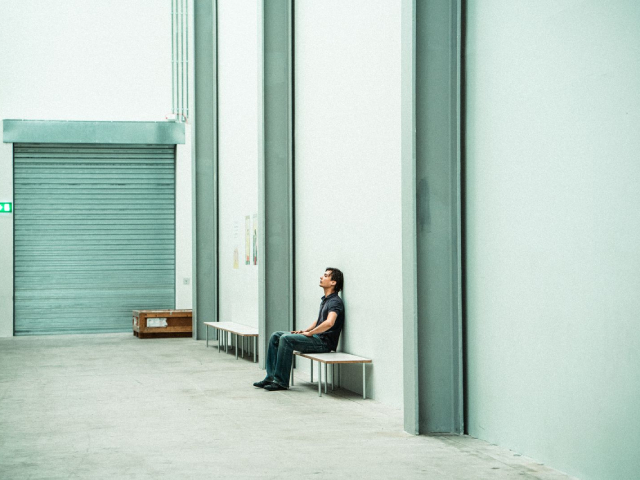
The Cannes award-winning writing and directorial debut from actor Harris Dickinson, URCHIN is an evocative coming-of-age drama which captures the pulse of London's forgotten corners – the canal paths, underpasses and derelict estates – along with the vulnerability and hopefulness of youth.
WATCH TRAILER HERE
WATCH TRAILER HERE
SHORT SYNOPSIS
URCHIN follows Mike, a rough sleeper in London, trapped in a cycle of self-destruction as he attempts to turn his life around. Raw and absurd, the film is a story about the strange patterns that keep pulling us back.
PRODUCTION STORY
URCHIN is a deeply personal story for writer-director Harris Dickinson, shaped by his experiences growing up around people struggling with addiction and difficult circumstances they couldn't escape. Through his work with various homeless charities, Harris became closely acquainted with the realities and challenges faced by those affected.
As he explains: "Being surrounded by these people made me realize that no matter how advanced we are as humans, we still have flaws and cycles that pull us back into the same behavioral patterns. In my local community in Walthamstow, there was an organization called Project Parker that helps with homelessness. They created a commune, providing a safe space, food, and welfare checks for unhoused individuals in the area. Around 2019/2020 I was becoming disillusioned with politics as a whole and wanted to take action on a more local level. So I began to lend a helping hand with very small localised things, it's where I really started to understand how many people in that community were incredibly vulnerable and in need of support "let down by society and the system."
Harris also continually works with the volunteer-led charity Under One Sky and even helped establish its Hackney division: "They have teams across London who go out each night to offer conversation, food, welfare checks, and referrals to those in need. Working with them brought me even closer to the issue."
Determined to tell these stories and highlight the work of these organizations, Harris knew he wanted to set URCHIN in his own community: "I started to sculpt and adapt my story around the things that were happening around me, really trying to understand the issue. I wanted to tell a story about a young man in my area. Stories about addiction, homelessness, and trauma can often feel heavy-handed, so I wanted to weave in comedy too"because with great tragedy often comes humour and levity. At its core, this is a story about cyclical behaviour. I worked on it for a long time, scrutinizing it with advisors from probation services, mental health support, and prison reform. I wanted to fully understand this world to find the story within it."
The first time producer Archie Pearch worked with Harris on his short film 2003 he knew that he had found a unique creative partnership: "Harris and I met eight years ago, and we hit it off immediately, realising we had very similar sensibilities." Pearch co-founded Devisio with Dickinson in 2024: "Urchin marks an exciting debut for Devisio and a bold step for Harris as a writer and director". As a filmmaker, "Harris embraces risk, bringing raw emotion and a distinct vision to the screen. Whilst there have been social realist films about homelessness, Harris' unique approach deploys both realism & something more poetic & unexpected - a kind of magical realism. Its a film that could only emerge out of his deep personal connection to these issues and his ongoing work in his community."
BBC Film commissioned Harris' short film and was eager to support his feature debut. For fellow producer Scott O'Donnell, their involvement was instrumental in bringing the film to life: "The script was developed with the support of BBC Film, and then BFI and Tricky Knot came onboard. They've all been exceptionally supportive-not just financially, but also critically-bringing immense enthusiasm and commitment to the project. We were under no illusions about how challenging this film would be to make, so it's been incredible to have partners who share the same passion we did."
Harris drew from a wide range of influences when developing the script and throughout the filming process. As he reflects: "I've grown up on the likes of Mike Leigh, Ken Loach and Shane Meadows. That's been my bread and butter. They're incredibly political filmmakers that hold a huge importance in film. I didn't want to make something that undermined the issues of the film or just showed them on a very basic, archetypal level. Working class cinema has the tendency to be bleak at times, and that's also a reflection of the stories out in the world that need to be told. My goal was to aim for something in the middle, combining elements of heightened cinema with the more grounded and investigated approach. That way, I think people can find a way into these themes whilst also going on a journey with a character, allowing them to laugh and fall with them too"
When reading Harris' script for the first time, Scott was struck by the balance of humour and heaviness: "One of the things I loved about the script from the start was its use of humour and lightness in the face of very heavy subject matter. The levity pulls you in and connects you with the material"it almost sneaks up on you, drawing you into a film about serious issues, but still making it an enjoyable experience. The script was incredibly strong, nuanced, full of life, humanity, and humour, which made it immensely engaging. It took you
on a real journey."
MIKE: ONE OF MANY
During casting, Harris and the creative team immediately recognized that Frank Dillane brought something uniquely compelling to the role. As Harris reflects: "Frank has such charm, but he also brought comedy and lightness, which were absolutely essential. Without that, the character could have easily become just a cantankerous, unruly stereotype."
When developing the character of Mike, Harris drew inspiration from a variety of individuals he encountered while working with homeless charities. "Mike was an amalgamation of several people"some I'd been close to, and others I'd worked with," he explains. "But I think he truly became his own person when Frank came on board and brought him to life. There was a lot in the writing, but Frank found his own way into the character, making him feel like a real person."
Harris further elaborates, "Frank came on board about seven or eight months before we shot the film, and from the start, it was clear he was the right person for the role. I connected him with a few charities, and he did a lot of his own prep work. I emphasized that understanding the world of homelessness and addiction, even if you can't fully experience it, would really benefit his performance."
Frank's preparation proved invaluable to his portrayal of Mike. "Before this project, I had been working with the Single Homeless Project and had close friends who were vulnerable to rough sleeping and substance issues," he shares. "I already had a deep connection to this world. But working with Under One Sky was crucial for meeting people, hearing their stories, and understanding their experiences."
Despite his prior knowledge, Frank admits feeling nervous about playing a character so distant from his own life: "With most characters, you owe them your body and soul for the time you're filming, but with Mike, I felt a real responsibility. His life felt very far from mine, and I had to catch up. I quickly saw how exhausting it must be to not have a place to call home. It's physically tiring, and there's no escape"you're always on guard."
Archie praises Frank's dedication to the role and the depth of his research: "When I met Frank, it was clear he completely embodied the role. The level of detail he brought to building Mike was profound. Watching Harris' cut for the first time, I felt everything I hoped to feel"I loved him, I hated him, I cried, I was frustrated. That's a testament to Frank's brilliance." Frank delivers an incredibly vulnerable and unexpectedly humorous performance that makes this film truly special.
The character of Mike is not presented for judgment but exists within a failing system. As Scott explains: "Harris made it clear from the start"this film isn't about judging Mike or anyone. It's not about judging the system either. It's simply showing the reality of what happens. It portrays the complexities of Mike's world, illustrating that, at times, even the best efforts aren't enough. Harris wanted to show that overcoming addiction is often a messy and difficult process, where people fall multiple times before they can truly conquer it."
THE CYCLICAL NATURE OF ADDICTION
When writing the script, Harris didn't want the primary focus to be solely the journey of an addict. As he explains: "I didn't want it to just be about drugs because there's a narrative that every addict is destructive, or every homeless person is addicted to drugs. That's simply not the case. Yes, there is a high rate of drug use in that community, but often as a coping mechanism. I wanted to highlight that someone can revert to a darker version of themselves, whether that's through alcohol, drugs, or other means."
For Frank, addiction is a deeply human struggle, and this is explored in a compelling way through the film: "We're all addicted to all sorts of things. When you're cold, a whisky warms you up. When you're sad, substances can make you feel better. It's simple in many ways. The real question is what happens when you take away everything you have and see what crutches you rely on."
In addition to the theme of addiction, Harris wanted to explore the complexities of self-help: "I wanted to weave this in because it can be incredibly comforting and helpful, but at the same time, it can also be quite frustrating"especially the more pseudo-intellectual forms of therapy. The tape that Mike listens to exemplifies this"it can be positive, but at other times, he just thinks it's nonsense and doesn't want to hear it."
For Archie, the film sparks conversations about topics that are often considered taboo. As he explains: "It wasn't long ago that the Ex-Home Secretary claimed that homelessness is a lifestyle choice. And the truth is, most people would likely walk right past someone in that situation without a second thought. This film aims to create a dialogue about an urgent issue, presenting it in a unique way and showing a different perspective on people who are often overlooked. It's a vital story that needs to be told now."
Scott notes the importance of recognising how easily this life can happen to anyone: "You realise that most of us are just one or two instances away from being in the same situation. It only takes a few things to go wrong, and suddenly your life can take an entirely different direction."



MORE
FEMALE.COM.AU
CONTACT US
FOLLOW US ON
Copyright © 2001 - Female.com.au, a Trillion.com Company - All rights reserved.