
How Workplace Fashion Is Evolving to Support Women's Professional Success
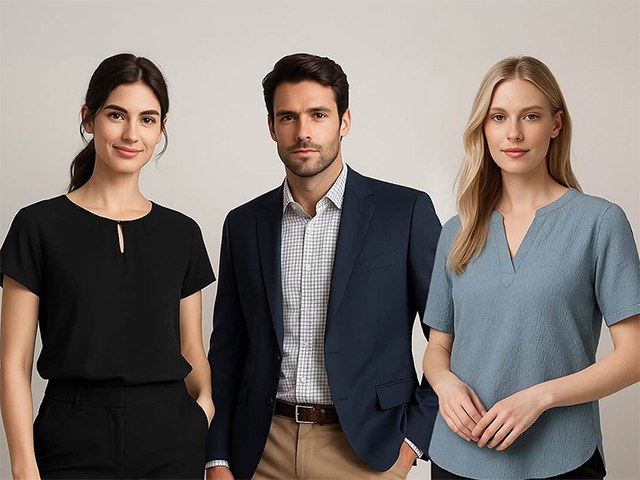
For many women, what they wear to work is about far more than appearance. The right professional attire can influence confidence, physical comfort, and even performance over the course of a demanding day. And as workplaces across Australia continue to evolve - becoming more diverse, more flexible, and more attuned to the needs of their people - the conversation around workplace fashion is shifting in ways that are worth paying attention to.
The one-size-fits-all approach to work clothing is giving way to something more considered. Businesses are investing in uniform programs that reflect their culture, suit their industry, and genuinely support the people wearing them. For women in particular, this shift matters. When professional clothing fits well, performs in the conditions it is worn in, and reflects a sense of identity rather than erasing it, the difference in how a person feels and functions can be significant.
This piece explores how workplace fashion is changing, what is driving that change, and what thoughtful uniform solutions actually look like across a range of industries and professional contexts.
Why Professional Appearance Still Matters - and What It Means Today
First impressions carry real weight in many professional settings. Whether a woman is meeting a new client, caring for a patient, leading a team, or representing a business at an event, what she wears contributes to how she is perceived and how she perceives herself.
This is not about conforming to outdated standards of what professional women should look like. It is about the practical reality that attire communicates something - about the organisation, about the role, and about the individual. When that communication is working well, it supports rather than distracts from the work itself.
Research in the area of enclothed cognition - the psychological effect of clothing on the wearer's mindset and behaviour - suggests that what we wear can influence how we think and perform. Wearing attire that feels appropriate, comfortable, and aligned with a professional role tends to support focus and confidence. Wearing clothing that is ill-fitting, uncomfortable, or misaligned with the demands of a role can do the opposite.
This is part of why businesses across Australia are increasingly partnering with custom uniform suppliers Australia to develop clothing solutions that genuinely serve their workforce. Rather than selecting from generic catalogues, organisations are working with suppliers to create garments that reflect their brand values, suit their specific industry conditions, and support the people who wear them day after day.
The Rise of Modern Corporate Uniforms and What Women Are Asking For
Corporate attire has changed considerably over the past decade, and the direction of that change has been toward greater comfort, practicality, and individual expression within a professional framework. Rigid dress codes are softening. Hybrid work models are prompting businesses to reconsider what professional attire actually needs to achieve. And employees - particularly women - are increasingly vocal about what they want from workplace clothing.
The shift is being driven by several converging factors:
- Greater awareness of how physical comfort affects performance and wellbeing over the course of a full working day
- Demand for clothing that transitions between different work contexts - a morning of client meetings, an afternoon at a desk, an evening networking event - without requiring a complete change
- Expectations around inclusivity and fit, with women of all body types seeking professional options that are designed with them in mind rather than adapted from styles that were not
- A growing preference for sustainable and easy-care fabrics that hold up well to regular wear and washing without losing their appearance
- Interest in contemporary cuts and design details that feel current rather than outdated, so that professional attire does not feel like a uniform in the most limiting sense of the word
Modern corporate uniforms designed with these priorities in mind look quite different from the stiff, generic workwear of previous generations. Breathable, structured fabrics that maintain their shape through a long day. Cuts that are flattering across a range of body types. Colour palettes and design options that allow organisations to express their brand clearly while giving employees attire they are comfortable wearing. These are the features that employees are asking for, and the suppliers that are delivering them are finding a receptive market.
From Corporate to Clinical: How Uniform Needs Vary Across Industries
Not all professional environments place the same demands on workplace attire, and the evolution of workplace fashion is playing out differently across different industries. Understanding those differences is important for organisations designing uniform programs that genuinely serve their workforce.
In corporate office environments, the primary considerations tend to be appearance, comfort across a full desk-based day, and the ability to project a polished professional image in client-facing contexts. Fabrics that breathe well in climate-controlled offices, styles that photograph well for professional communications, and options that accommodate the range of body types represented in a modern workforce are all relevant.
In retail and hospitality, functionality becomes more prominent. Staff are on their feet for extended periods, often in varied temperature conditions, and their attire needs to be durable and easy to maintain while still presenting the brand clearly to customers. Colour fastness, ease of laundering, and resistance to the wear of a physical work environment matter alongside appearance.
In healthcare and essential services, the demands shift again - and become particularly acute. Healthcare workers spend long shifts on their feet, frequently moving between different physical contexts, and require attire that supports rather than hinders their work. Well-designed medical healthcare uniforms address this through features that generic workwear simply does not offer: moisture-wicking fabrics that manage body temperature during physically demanding work, strategically placed pockets that keep essential tools accessible, stretch panels that allow a full range of movement, and easy-care properties that withstand the rigorous laundering required in clinical environments.
Supporting Women in Healthcare: Why Uniform Quality Has Real Consequences
The healthcare workforce in Australia is predominantly female. Nurses, midwives, allied health professionals, and administrative staff working in clinical environments make up a significant proportion of the women who go to work each day in uniforms - and the quality of those uniforms has a direct effect on their ability to do their jobs effectively and comfortably.
This is an area where the gap between adequate and genuinely good uniform solutions is most visible. Healthcare workers dealing with uncomfortable, poorly fitted, or functionally inadequate clothing are not simply experiencing a minor inconvenience. They are managing an additional source of friction during already demanding shifts - friction that accumulates over a full day and contributes to physical fatigue and reduced focus.
The specific features that make a meaningful difference for women in healthcare include:
- Fit across a range of body types - standard sizing in healthcare uniforms has historically been poor, leaving many women in garments that do not fit correctly and restrict movement or create discomfort
- Moisture management - clinical environments vary significantly in temperature, and physical activity levels during a shift are high. Fabrics that wick moisture and dry quickly reduce discomfort and help regulate body temperature
- Pocket placement and design - healthcare workers carry essential tools throughout a shift. Pockets positioned for practical access rather than aesthetic purposes reduce the need for additional pouches or holders
- Durability under frequent laundering - clinical uniforms need to withstand high-temperature washing and remain presentable over extended periods of use
- Stretch and mobility - a full range of movement is essential in clinical work. Panels and fabric blends that accommodate bending, reaching, and lifting without restricting or tearing are not optional
What employees say about the difference good workwear makes
When healthcare and corporate workers are asked about the impact of their work attire, the responses are consistent. Clothing that fits well and is appropriate for the demands of the role is associated with:
• Greater confidence in client and patient-facing interactions
• Reduced physical discomfort during long shifts or extended desk-based days
• A stronger sense of belonging and identification with the organisation
• Less mental energy spent managing clothing-related discomfort or self-consciousness
Conversely, poorly fitting or functionally inadequate attire is associated with distraction, discomfort, and a sense that the employer does not take employee wellbeing seriously. The uniform a business provides communicates something about how it values its people - and employees notice.
The Connection Between Comfort, Confidence, and Performance
The relationship between physical comfort and professional performance is well documented but still underappreciated in many workplace contexts. When people are physically comfortable - not distracted by ill-fitting clothing, not managing the discomfort of unsuitable fabrics in demanding conditions - they have more cognitive and physical resources available for the work itself.
For women, this dynamic has an additional dimension. Professional environments have not always been designed with women's comfort and functionality in mind, and workplace attire has historically reflected that. Clothing designed around male bodies and professional norms adapted for women rather than purpose-built for them has been the default for much of the history of women in the professional workforce.
That is changing, but it requires deliberate effort from employers and suppliers alike. The businesses making that effort - investing in uniform programs that prioritise fit, function, and genuine employee comfort - consistently report positive outcomes:
- Stronger employee engagement and a greater sense of pride in representing the organisation
- Reduced turnover in roles where uniform quality has historically been a source of frustration
- Improved customer and client perception of the business, as staff who are comfortable and confident present differently than those who are not
- Fewer complaints and informal workarounds - such as staff wearing their own clothing under or instead of provided uniforms because the provided options are uncomfortable or ill-fitting
These are not abstract benefits. They translate into measurable outcomes: lower recruitment costs, better service quality, stronger brand presentation, and a workplace culture that is more likely to attract and retain capable professionals.
7 Questions to Ask When Reviewing Your Organisation's Uniform Program
For businesses considering whether their current approach to workplace attire is genuinely serving their workforce, the following questions provide a useful starting framework:
- Does the uniform fit well across the range of body types represented in the workforce? Standard sizing frequently fails to accommodate the diversity of real bodies. A uniform that only works well for a narrow range of sizes is not working well enough.
- Is the fabric appropriate for the physical demands of the role? Office wear, healthcare uniforms, and hospitality attire have different functional requirements. The fabric choices should reflect what the work actually involves.
- Are employees comfortable raising concerns about their uniform? If feedback channels do not exist or are not used, problems with fit and function may be going unaddressed and contributing quietly to dissatisfaction.
- How does the uniform hold up over time? A garment that looks good on day one but loses its shape or colour quickly is a false economy. Durability matters, particularly for roles with frequent laundering requirements.
- Does the uniform reflect the organisation's current brand and values? Uniforms that were designed years ago may no longer align with how the business presents itself or the culture it is trying to build.
- Are there options that accommodate different needs? Religious and cultural considerations, pregnancy, temperature sensitivity, and mobility requirements all affect what works for individual employees. A uniform program that lacks flexibility creates unnecessary exclusion.
- Have employees been involved in the selection process? The people who wear the uniforms every day have the clearest sense of what works and what does not. Involving them in procurement decisions tends to produce better outcomes and stronger buy-in.
Looking Ahead: Where Workplace Fashion Is Heading
The trajectory of workplace fashion in Australia is toward greater personalisation, greater inclusivity, and greater attention to the functional requirements of different professional roles. The forces driving that shift - employee expectations, evolving workplace cultures, a better understanding of the relationship between comfort and performance - are not going away.
For women in the workforce, this evolution represents something meaningful. Professional attire that is designed with their needs genuinely in mind - rather than adapted from designs that were not - supports their ability to do their work effectively, to feel confident in professional contexts, and to engage with their employer's culture without the constant low-level friction of clothing that does not quite fit or function as it should.
Employers that recognise this and invest accordingly are making a statement about how they value their people. And in a competitive labour market, that statement is heard.
For businesses at the beginning of that journey - or those looking to revisit and improve existing uniform programs - the starting point is a simple one: talk to your employees about what they need, and work with suppliers who have the range and the expertise to deliver it. The right workwear is not a luxury. It is part of what it means to take your workforce seriously.
MORE
FEMALE.COM.AU
CONTACT US
FOLLOW US ON